Oriental Poppy
Papaver orientale
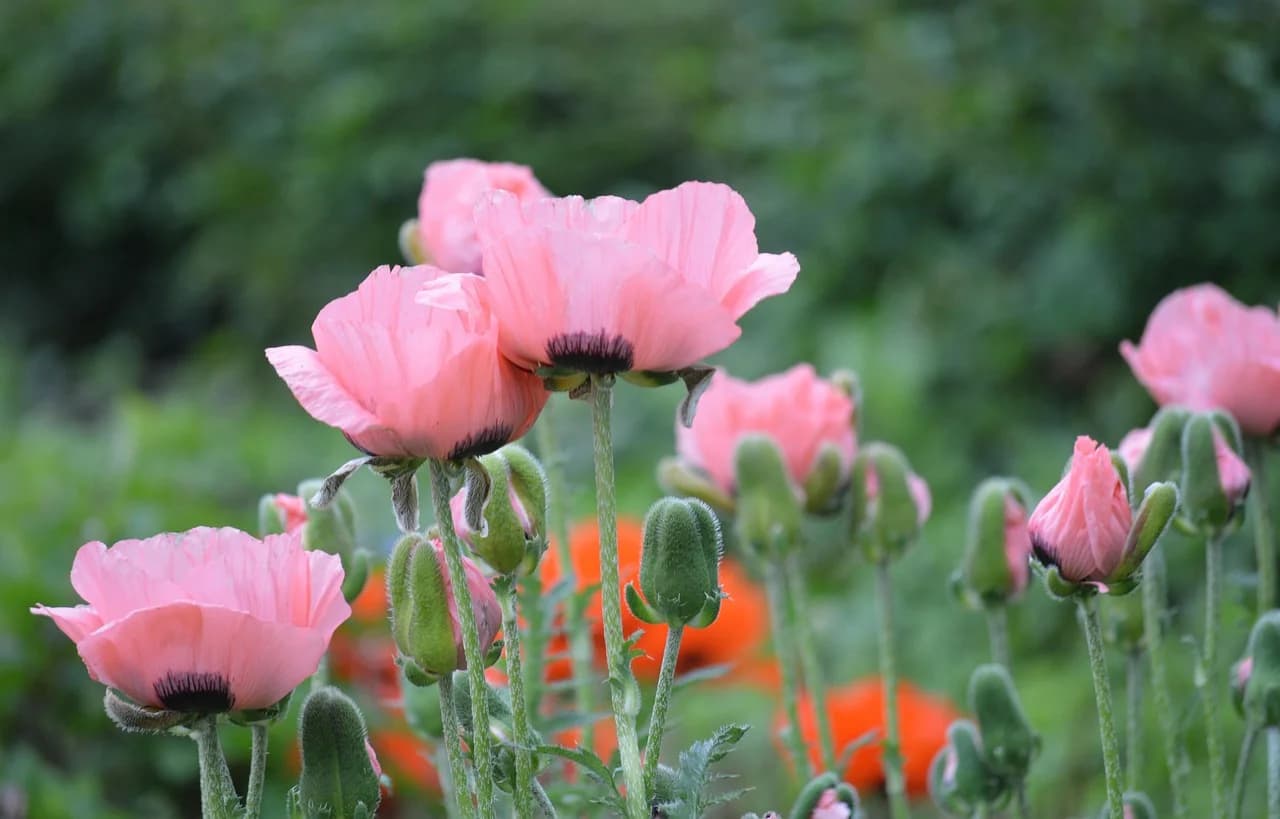
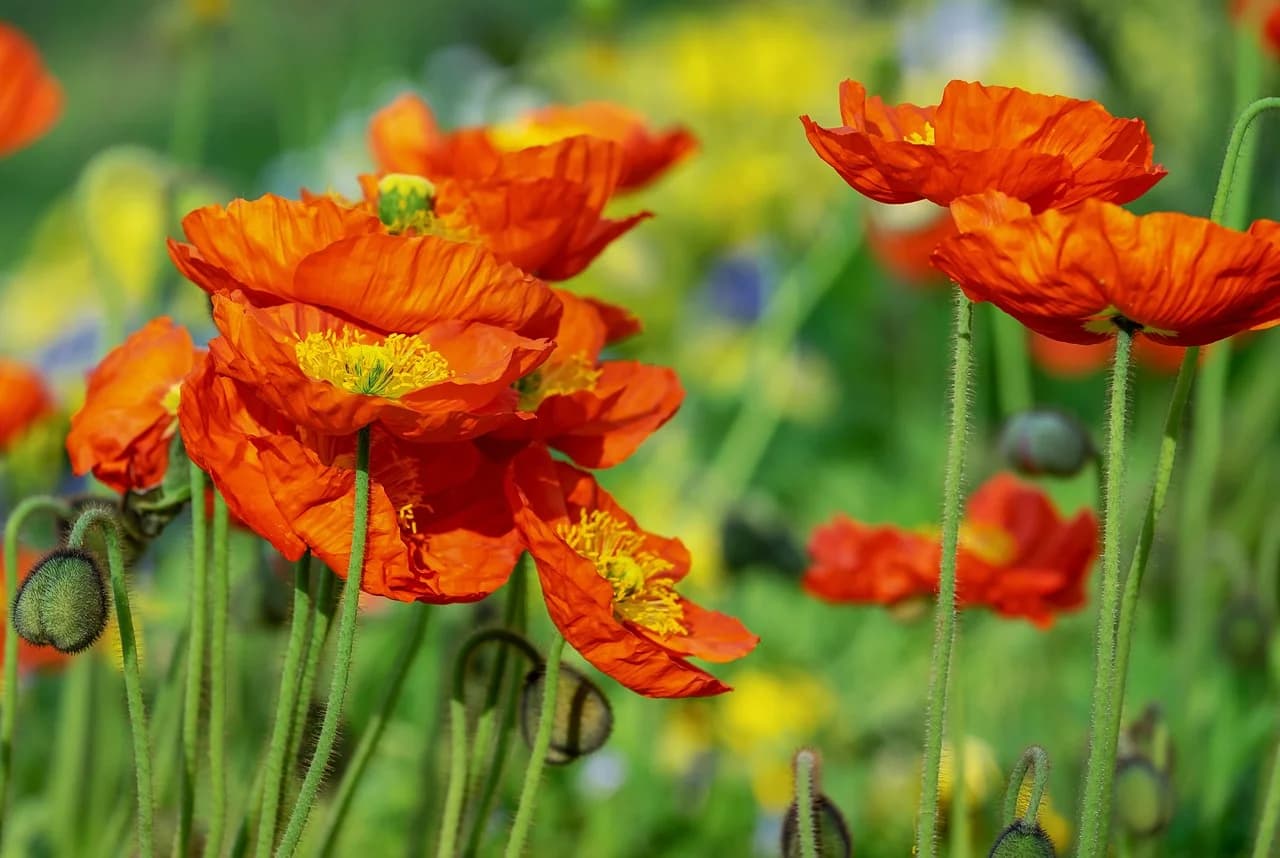
Oriental poppy is a clump-forming perennial with large cup-shaped orange, red or pink flowers in late spring and early summer. It grows best in full sun and well-drained soil.
Quick facts
- Germination time
- Not yet verified
- Germination temperature
- Not yet verified
- Sowing depth
- Not yet verified
- Spacing between plants
- Not yet verified
- Days to maturity
- Not yet verified
- Sun
- Full sun, partial shade
Mildly toxic to people Read the safety notes
Safety for cats and dogs: not yet verified.
By SeedBattle EditorsUpdated
Spotted a mistake or missing detail? Improve this page
01 · Overview
About oriental poppy
Oriental poppy (Papaver orientale) is a clump-forming herbaceous perennial native to Central Asia. It bears large cup-shaped flowers, usually orange, red or pink with dark centers, in late spring or early summer, and Illinois lists the bloom season as May through June. Each flower has small purple-black blotches at the base of its petals. The finely divided gray-green leaves give the plant an airy look. Mature plants usually reach 2 to 3 feet (61 to 91 cm) tall.
Growing details
- Start indoors
- Not yet verified
- Sow outdoors
- Not yet verified
- Water
- Low
- Containers
- Not yet verified
- Height
- 61–91 cm2–3 ft
- Spread
- 15–61 cm½–2 ft
- Frost tolerance
- Not yet verified
- Soil pH
- Not yet verified
- Life cycle
- Perennial
- Hardiness zones
- USDA zones 2–7
02 · How to grow
How to grow oriental poppy from seed
Sowing dates, sowing depth and germination time aren’t covered for this plant yet, so none are given here. Seed needs an adequate cold period in winter to germinate well, and plants grown from seed may not keep the flower color of the parent plant.
Plant in full sun and in well-drained garden soil. Transplanting is difficult because of the fleshy taproot. Plant in large groups in a meadow or in clumps along a border.
Gardeners can also propagate by division in spring or by root cuttings taken in late autumn or early winter.
03 · Care
Caring for oriental poppy
Avoid overwatering, which can cause root rot of the deep taproot. The soil needs to drain very well, especially over winter.
After flowering, the plant dies back to the ground and goes dormant, and new basal leaves return in fall and stay through winter. Lightly mulch new plantings for the first winter. Cut spent flowering stems back to the ground and cut back the foliage as it fades. Place it among plants that will fill in the gap left when the foliage dies down.
At a glance
How oriental poppy compares with other flowers
Worked out from the growing facts of the 79 seeds in Flowers on SeedBattle.
- Oriental Poppy
- Each of the other flowers
- Their average
- HeightAbout average
61–91 cm2–3 ft
Average for flowers: 70 cm2½ ft, from 68 other seeds
04 · Problems
Common oriental poppy problems
No serious insect or disease problems are noted for this plant. Root rot can occur in poorly drained soil. Aphids may attack the plant, and it may be susceptible to downy mildews, powdery mildews, fungal wilts and Verticillium wilt.
05 · Safety
Oriental Poppy safety
For people, this plant is rated low severity, and all parts are listed as poisonous, including the juice. Don’t eat any part of this plant. Related poppies have caused low-level toxicity in animals, so this plant may also be toxic to animals. No cat or dog toxicity rating is available for this plant.
Oriental Poppy questions
How long do Oriental poppy seeds take to germinate?
A germination time isn’t given for this plant yet. Seed needs an adequate cold period in winter to germinate well.
How tall does Oriental poppy grow?
Mature plants usually reach 2 to 3 feet (61 to 91 cm) tall. The spread is about 6 inches to 2 feet (15 to 61 cm).
Are Oriental poppies poisonous?
This plant is rated low severity for people, and all parts are listed as poisonous, including the juice. Don’t eat any part of it.
Why do Oriental poppies disappear after flowering?
After flowering, the plant dies back to the ground and goes dormant, and new leaves return to stay over winter.
Quick answers
More oriental poppy questions
Short answers taken from the growing facts on this page.
How much sun does oriental poppy need?
Oriental poppy grows in full sun or partial shade.
Is oriental poppy an annual or a perennial?
Oriental poppy is a perennial.
How much water does oriental poppy need?
Oriental poppy has low water needs.
Which USDA zones can oriental poppy grow in?
Oriental poppy is hardy in USDA zones 2–7.
Side by side
Compare oriental poppy with…
Two seeds, every growing fact lined up, so you can pick the one that suits your space.
Flowers
More seeds like oriental poppy
Related seeds, plus others in the Flowers category.
Find your next seed to grow
Browse all 223 seeds by sun, difficulty or pot size, or line oriental poppy up against another seed.
