Nasturtium
Tropaeolum majus
An easy, fast-growing annual with edible, peppery leaves and flowers. Sow it straight into poor to average soil after the last frost; too much fertilizer means fewer flowers.
Quick facts
- Germination time
- 7–14 days
- Germination temperature
- 16–18 °C61–64 °F
- Sowing depth
- 1.5–2.5 cm½–1 in
- Spacing between plants
- 20–30 cm8–12 in
- Days to maturity
- Not yet verified
- Sun
- Full sun, partial shade
Safety for cats and dogs: not yet verified.
By SeedBattle EditorsUpdated
Spotted a mistake or missing detail? Improve this page
01 · Overview
About nasturtium
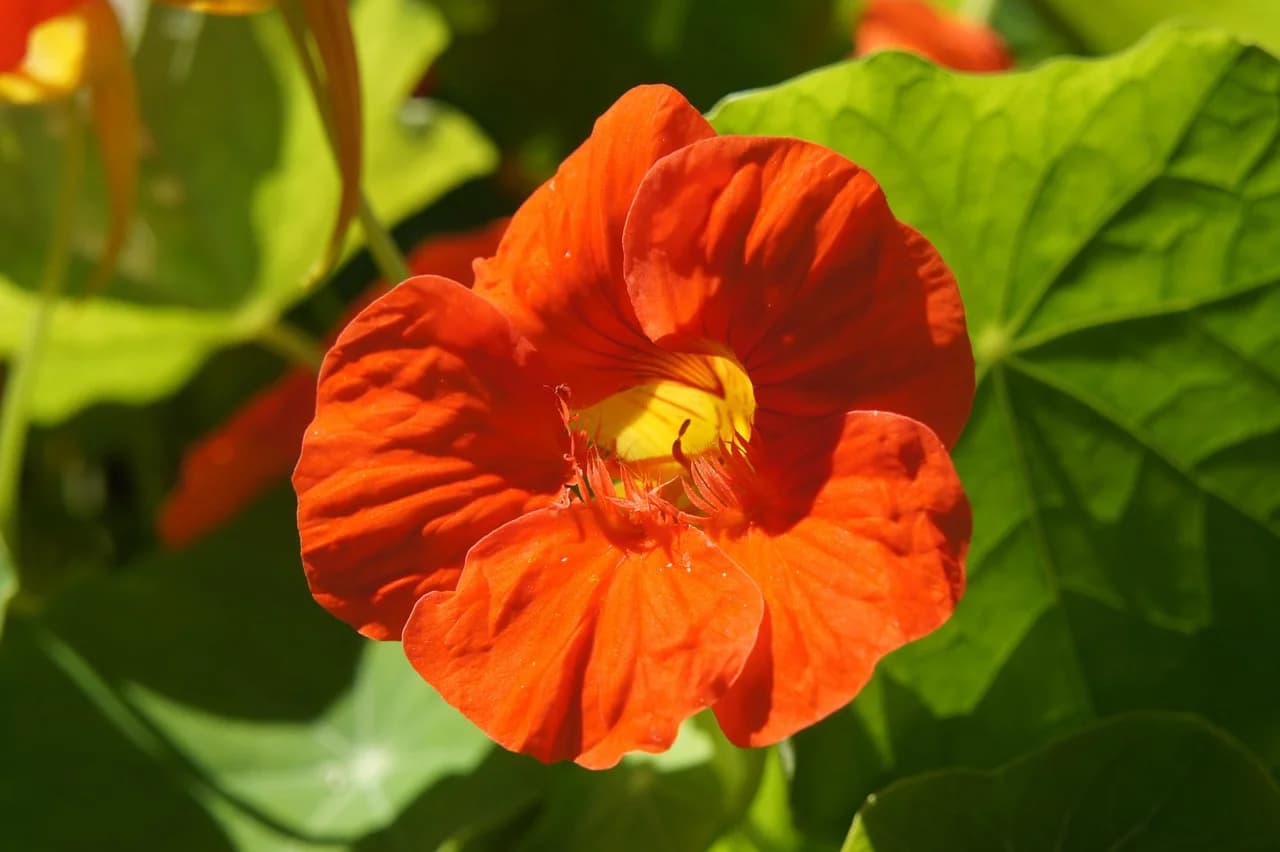
Nasturtium (Tropaeolum majus) is a warm-weather annual with long stems, round, parasol-like leaves and spurred, five-petaled flowers in cream, yellow, orange, red and burgundy. It comes from Central and South America and is an easy-to-grow tender perennial that’s grown as an annual in cold climates.
Bushy or trailing. Depending on the variety, plants either form low mounds or trail up to 3 feet (90 cm); compact types stay about 12 inches (30 cm) tall, which makes them good for edging. Trailing or “climbing” types can grow up to 10 feet (3 m) and quickly cover fences and trellises, but they need support to climb.
Good to eat. The leaves, flowers and seed pods are edible, with a slightly peppery taste like watercress.
Growing details
- Start indoors
- 4–6 weeks before the last frost
- Sow outdoors
- Not yet verified
- Water
- Not yet verified
- Containers
- Yes
- Height
- Not yet verified
- Spread
- Not yet verified
- Frost tolerance
- Not yet verified
- Soil pH
- Not yet verified
- Life cycle
- Annual
Sowing timeline
When to sow nasturtium seeds
Counted from your area's average last spring frost date. Find yours from a local weather service or garden center, then count back or forward.
- Germination time
- 7–14 days
- Germination temperature
- 16–18 °C61–64 °F
02 · How to grow
How to grow nasturtium from seed
Sow outdoors after frost. Nasturtiums don’t transplant well, so it’s best to sow the seeds straight into the garden once the danger of frost has passed. In the UK, gardening experts give March to May as the time to sow outdoors.
Sow ½–1 inch deep and cover the seeds. Sow ½ to 1 inch (1.3–2.5 cm) deep and cover the seeds, because they need darkness to germinate. Soaking them in water for a few hours or overnight before sowing can improve germination. Keep the seedbed moist, and expect seedlings in 7 to 14 days at 60–65 °F (16–18 °C).
Or start them indoors. For earlier flowers, sow in peat pots indoors 4 to 6 weeks before your last expected spring frost.
Spacing. Space plants 8 to 12 inches (20–30 cm) apart. In a hanging basket or a 10-inch (25 cm) container, thin to 3 to 5 plants.
Sun and soil. Plant nasturtiums in well-drained soil in full sun. They’ll grow in partial shade but won’t bloom well there. Poor to average soil is best, and some afternoon shade helps in hot summers. Rich soil isn’t a good idea: too much nitrogen gives you more leaves than flowers.
Pots and baskets. Trailing types are useful in hanging baskets and window boxes or tumbling down walls, and nasturtiums do very well in containers.
03 · Care
Caring for nasturtium
Watering. Nasturtiums like dry soil and tolerate drought, but water them regularly through the season to keep them flowering strongly. Well-watered plants also have milder-tasting leaves and flowers.
Feeding. Don’t fertilize unless your soil is extremely poor: high rates of fertilizer give more leaves and fewer flowers.
Deadheading and trimming. Deadheading or picking the flowers keeps the plants blooming. If plants get leggy or tired in summer, cut them back lightly and they’ll regrow for the rest of the season. In mixed containers, trim them now and then so they don’t crowd out their neighbors.
Support. Climbing and trailing varieties need a trellis or other support to climb.
At a glance
How nasturtium compares with other flowers
Worked out from the growing facts of the 79 seeds in Flowers on SeedBattle.
- Nasturtium
- Each of the other flowers
- Their average
- Germination timeSprouts sooner than average
7–14 days
Average for flowers: 12 days, from 42 other seeds
- Germination temperatureCooler than average
16–18 °C61–64 °F
Average for flowers: 21 °C70 °F, from 40 other seeds
- Sowing depthDeeper than average
1.5–2.5 cm½–1 in
Average for flowers: 4 mm⅛ in, from 25 other seeds
- Spacing between plantsCloser than average
20–30 cm8–12 in
Average for flowers: 37 cm15 in, from 13 other seeds
04 · Problems
Common nasturtium problems
The most common pests are aphids and the caterpillars of the imported cabbageworm. Watch for whiteflies and mealybugs too; gardening experts also lists glasshouse whitefly and glasshouse red spider mite. Leafminers may leave winding trails in the leaves, but these don’t harm the plant.
Nasturtiums can be affected by virus diseases. They also self-seed, which can make them spread.
05 · Harvest
Harvesting nasturtium
Pick flowers when they’re fully open; leaves can be picked at any time. Young leaves are the most tender and flavorful, while older leaves can turn bitter. The flower buds and unripe seed pods are edible too, and have been compared to capers when pickled.
06 · Storage
Storing nasturtium
Keep picked leaves and flowers in plastic bags in the refrigerator.
07 · Safety
Nasturtium safety
Eating. Nasturtium leaves, buds, flowers, pods and seeds are edible, with a spicy, peppery taste. Plants stressed by heat can produce leaves and flowers that taste stronger than most people like.
Skin. Gardening experts list garden nasturtium as a skin allergen and recommends wearing gloves when handling it.
Pets. Pet poison experts list Tropaeolum majus as non-toxic to dogs, cats and horses, with no records of toxic ingestion. Gardening experts’s plant database, however, flags it as a problem for cats, dogs and horses without giving details. Don’t confuse garden nasturtium with watercress, whose botanical name is Nasturtium officinale: it’s a different plant, and pet poison experts list it as toxic to dogs, cats and horses.
Nasturtium questions
Are nasturtiums edible?
Yes. The flowers, leaves and seed pods are edible and taste slightly peppery, like watercress. Young leaves taste best; older ones can be bitter.
How long do nasturtium seeds take to germinate?
About 7 to 14 days at 60–65 °F (16–18 °C), often a week to ten days depending on soil temperature.
Should I soak nasturtium seeds before planting?
It helps. Soaking the seeds for a few hours or overnight before planting can improve germination.
When should I plant nasturtium seeds?
Sow them outdoors once all danger of frost has passed, or start them indoors in peat pots 4 to 6 weeks before your last expected spring frost.
Can I grow nasturtiums in a pot or hanging basket?
Yes, they’re excellent in containers and hanging baskets. Thin to 3 to 5 plants in a hanging basket or a 10-inch (25 cm) container.
Quick answers
More nasturtium questions
Short answers taken from the growing facts on this page.
How deep should I sow nasturtium seeds?
Sow them 1.5–2.5 cm½–1 in deep.
How far apart should I plant nasturtium?
Space the plants 20–30 cm8–12 in apart.
How much sun does nasturtium need?
Nasturtium grows in full sun or partial shade.
What temperature do nasturtium seeds need to sprout?
Nasturtium seeds germinate at 16–18 °C61–64 °F.
Is nasturtium an annual or a perennial?
Nasturtium is an annual.
Side by side
Compare nasturtium with…
Two seeds, every growing fact lined up, so you can pick the one that suits your space.
Flowers
More seeds like nasturtium
Other seeds in the Flowers category.
Find your next seed to grow
Browse all 223 seeds by sun, difficulty or pot size, or line nasturtium up against another seed.