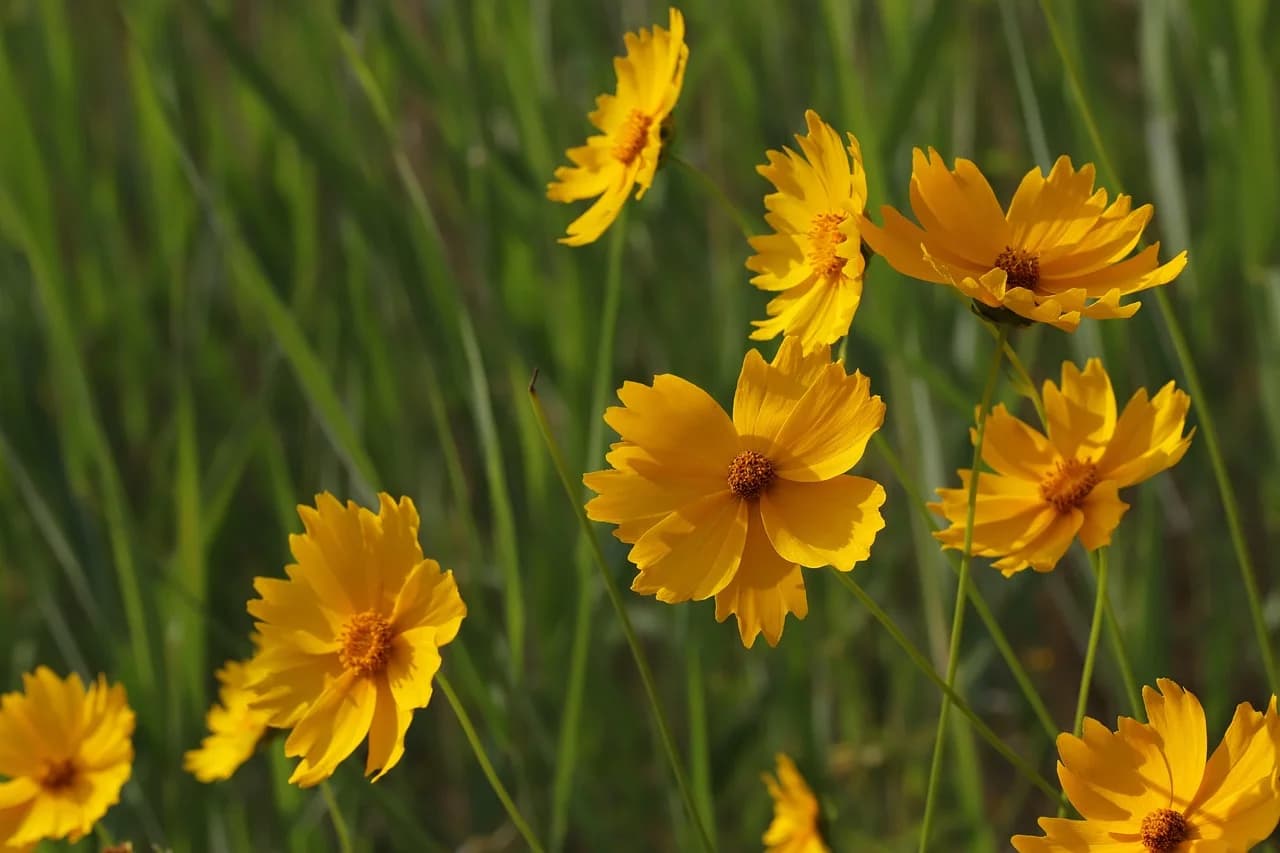
Lanceleaf Coreopsis
Coreopsis lanceolata
Also called tickseed
Lanceleaf coreopsis is a bushy, clump-forming perennial with yellow daisy-like flowers. It likes full sun, handles drought and heat well, and is resistant to deer.
Quick facts
- Germination time
- Not yet verified
- Germination temperature
- Not yet verified
- Sowing depth
- Not yet verified
- Spacing between plants
- Not yet verified
- Days to maturity
- Not yet verified
- Sun
- Full sun, partial shade
Non-toxic to cats and dogs
By SeedBattle EditorsUpdated
Spotted a mistake or missing detail? Improve this page
01 · Overview
About lanceleaf coreopsis
Lanceleaf coreopsis (Coreopsis lanceolata), also called tickseed, is a bushy, clump-forming perennial with narrow, lance-shaped leaves and daisy-like yellow flowers held on long stalks. It typically grows to about 2 feet (61 cm) tall and occurs in prairies, fields and roadsides.
Growing details
- Start indoors
- Not yet verified
- Sow outdoors
- Not yet verified
- Water
- Moderate
- Containers
- Yes
- Height
- 30–91 cm1–3 ft
- Spread
- 30–61 cm1–2 ft
- Frost tolerance
- Not yet verified
- Soil pH
- Not yet verified
- Life cycle
- Perennial
- Hardiness zones
- USDA zones 4–9
02 · How to grow
How to grow lanceleaf coreopsis from seed
Sowing and propagation. Plants can be grown by seed sown in late winter, and they can also be divided in spring or autumn. Division may be needed every 2 to 3 years to keep plants vigorous.
Light and soil. It prefers full sun with moist, well-drained soil, though it will grow in partial shade. It thrives in sandy and rocky soils.
03 · Care
Caring for lanceleaf coreopsis
Watering. Keep it moist during spells of dry weather. It is resistant to drought once it is growing well.
Deadheading and cutting back. Deadheading spent flowers encourages more blooms and helps control self-seeding. Deadhead for continuous flowering and cut back in winter. Plants can be cut back hard if they become too sprawling.
At a glance
How lanceleaf coreopsis compares with other flowers
Worked out from the growing facts of the 79 seeds in Flowers on SeedBattle.
- Lanceleaf Coreopsis
- Each of the other flowers
- Their average
- HeightShorter than average
30–91 cm1–3 ft
Average for flowers: 70 cm2½ ft, from 68 other seeds
04 · Problems
Common lanceleaf coreopsis problems
It can be an aggressive self-seeder and can get weedy if not maintained. Growing it in too fertile soil can make it sprawl. Crown rot may occur if it is grown in moist, poorly drained soil. It may be susceptible to slugs and snails.
05 · Safety
Lanceleaf Coreopsis safety
Lanceleaf coreopsis is listed as non-toxic for cats and for dogs.
Lanceleaf Coreopsis questions
How tall does lanceleaf coreopsis grow?
It typically grows to about 2 feet (61 cm) tall, with a listed range of 1 to 3 feet (30 to 91 cm).
Can I grow lanceleaf coreopsis in a pot?
It is suggested for patio and container planting.
Is lanceleaf coreopsis safe around cats and dogs?
It is listed as non-toxic for cats and for dogs.
Does lanceleaf coreopsis come back every year?
It is a perennial, and it may need division every 2 to 3 years to stay robust.
Quick answers
More lanceleaf coreopsis questions
Short answers taken from the growing facts on this page.
How much sun does lanceleaf coreopsis need?
Lanceleaf coreopsis grows in full sun or partial shade.
How much water does lanceleaf coreopsis need?
Lanceleaf coreopsis has moderate water needs.
Which USDA zones can lanceleaf coreopsis grow in?
Lanceleaf coreopsis is hardy in USDA zones 4–9.
Side by side
Compare lanceleaf coreopsis with…
Two seeds, every growing fact lined up, so you can pick the one that suits your space.

Flowers
More seeds like lanceleaf coreopsis
Other seeds in the Flowers category.


Find your next seed to grow
Browse all 223 seeds by sun, difficulty or pot size, or line lanceleaf coreopsis up against another seed.
