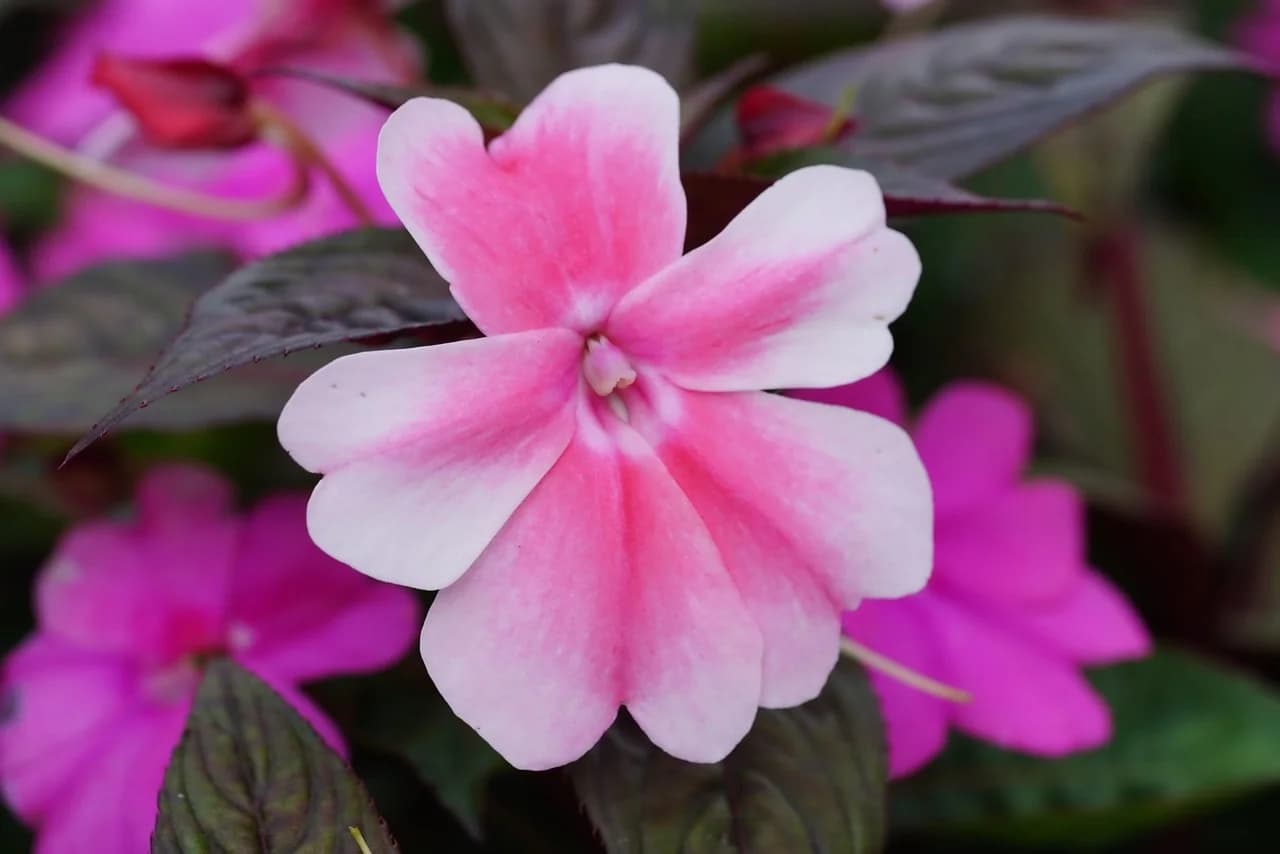
Impatiens
Impatiens walleriana
Also called busy lizzie
Impatiens walleriana, also called Busy Lizzie, is a popular shade bedding plant that is easy to grow but tender to frost and prone to downy mildew.
Quick facts
- Germination time
- Not yet verified
- Germination temperature
- Not yet verified
- Sowing depth
- Not yet verified
- Spacing between plants
- 20–25 cm8–10 in
- Days to maturity
- Not yet verified
- Sun
- Partial shade, full shade
Non-toxic to cats and dogs
By SeedBattle EditorsUpdated
Spotted a mistake or missing detail? Improve this page
01 · Overview
About impatiens
Impatiens walleriana, often called Busy Lizzie, is one of the most popular bedding plants in the United States. It is native to eastern Africa, from Kenya to Mozambique. It is usually grown as an annual bedding plant, and its flowers come in white, peach, apricot, pink, and red from late spring until the first frost of fall. Flowers are 1 to 2 inches (2.5 to 5 cm) across.
Growing details
- Start indoors
- Not yet verified
- Sow outdoors
- Not yet verified
- Water
- Not yet verified
- Containers
- Yes
- Height
- 15–60 cm6–24 in
- Spread
- 25–38 cm10–15 in
- Frost tolerance
- Tender (no frost)
- Soil pH
- pH 6.0–8.0
- Life cycle
- Not yet verified
- Hardiness zones
- USDA zones 10–11
02 · How to grow
How to grow impatiens from seed
Sowing. Seeds can be started indoors in late winter. Start them about 6 to 10 weeks before you plan to set plants outside. Some advice gives 8 to 10 weeks before the outdoor planting date. Harden seedlings off before planting them out.
Plant seedlings outdoors after the last spring frost, because the plants will not tolerate cold. They grow best in moist, well-drained soil with organic material added.
Light. Impatiens do best in part shade to full shade. Spots that get filtered sun for 2 to 4 hours, or morning sun with afternoon shade, are usually ideal. Some sunnier spots work if the plants get enough water.
Spacing. Space compact varieties 8 to 10 inches (20 to 25 cm) apart. Taller varieties need about 18 inches (46 cm) between plants.
03 · Care
Caring for impatiens
Watering. Keep the plants well watered, but not soggy, at all times. They have low drought tolerance and wilt in hot, dry spells. Overwatering can cause the plant to rot.
Feeding. Fertilize monthly with a water-soluble fertilizer.
Containers. Impatiens grow well in containers and hanging baskets. Use a soil-less mix with good drainage, and expect to water container plants more often than plants in the ground.
Pruning. In late summer, plants can look leggy. Trim off the top third of the plant to encourage new blooms.
At a glance
How impatiens compares with other flowers
Worked out from the growing facts of the 79 seeds in Flowers on SeedBattle.
- Impatiens
- Each of the other flowers
- Their average
- Spacing between plantsCloser than average
20–25 cm8–10 in
Average for flowers: 37 cm15 in, from 13 other seeds
- HeightShorter than average
15–60 cm6–24 in
Average for flowers: 71 cm2½ ft, from 68 other seeds
04 · Problems
Common impatiens problems
Downy mildew is the main concern. All varieties of the common garden impatiens (Impatiens walleriana) are susceptible to it. Symptoms include yellowing leaves, curled leaves, white fuzzy growth under the leaves, and dropping flowers. Control with fungicides is not practical in home landscapes. Remove and destroy infected plants, and do not add them to a home compost pile. Newer resistant cultivars such as Beacon are available.
Deer can browse the plants.
05 · Harvest
Harvesting impatiens
Seed pods ripen in late summer and fall and burst open to release seeds. Plants can also be propagated from cuttings taken in fall. Self-sown seedlings may revert to tall plants with mixed colors rather than the colors you planted.
06 · Safety
Impatiens safety
Pets: one page lists this plant as non-toxic for cats and dogs. The pages used here do not give a full toxicity rating for cats or dogs, so check with a vet or a trusted pet poison resource before letting pets chew the plants.
Impatiens questions
When should I start impatiens seeds indoors?
Start them about 6 to 10 weeks before you plan to set plants outside. Some advice gives 8 to 10 weeks before the outdoor planting date.
Can I grow impatiens in a pot?
Yes, impatiens grow well in containers and hanging baskets. Plants in pots need more frequent watering.
Do impatiens grow in full sun?
They perform best in part shade to full shade. Some sunny spots work if the plants get enough water, but too much sun can scorch the leaves.
Are impatiens hardy outdoors in winter?
No, these are tropical plants that will not tolerate cold weather. Plant them outdoors only after the last spring frost.
Do impatiens get downy mildew?
Yes, all varieties of the common garden impatiens are susceptible to downy mildew. Newer resistant cultivars are available.
Quick answers
More impatiens questions
Short answers taken from the growing facts on this page.
How far apart should I plant impatiens?
Space the plants 20–25 cm8–10 in apart.
How tall does impatiens grow?
Impatiens grows 15–60 cm6–24 in tall.
What soil pH does impatiens need?
Aim for soil at pH 6.0–8.0.
Which USDA zones can impatiens grow in?
Impatiens is hardy in USDA zones 10–11.
Is impatiens safe for cats and dogs?
Yes. It's listed as non-toxic to cats and dogs.
Side by side
Compare impatiens with…
Two seeds, every growing fact lined up, so you can pick the one that suits your space.
Flowers
More seeds like impatiens
Other seeds in the Flowers category.

Find your next seed to grow
Browse all 223 seeds by sun, difficulty or pot size, or line impatiens up against another seed.
