Gomphrena
Gomphrena globosa
Also called globe amaranth
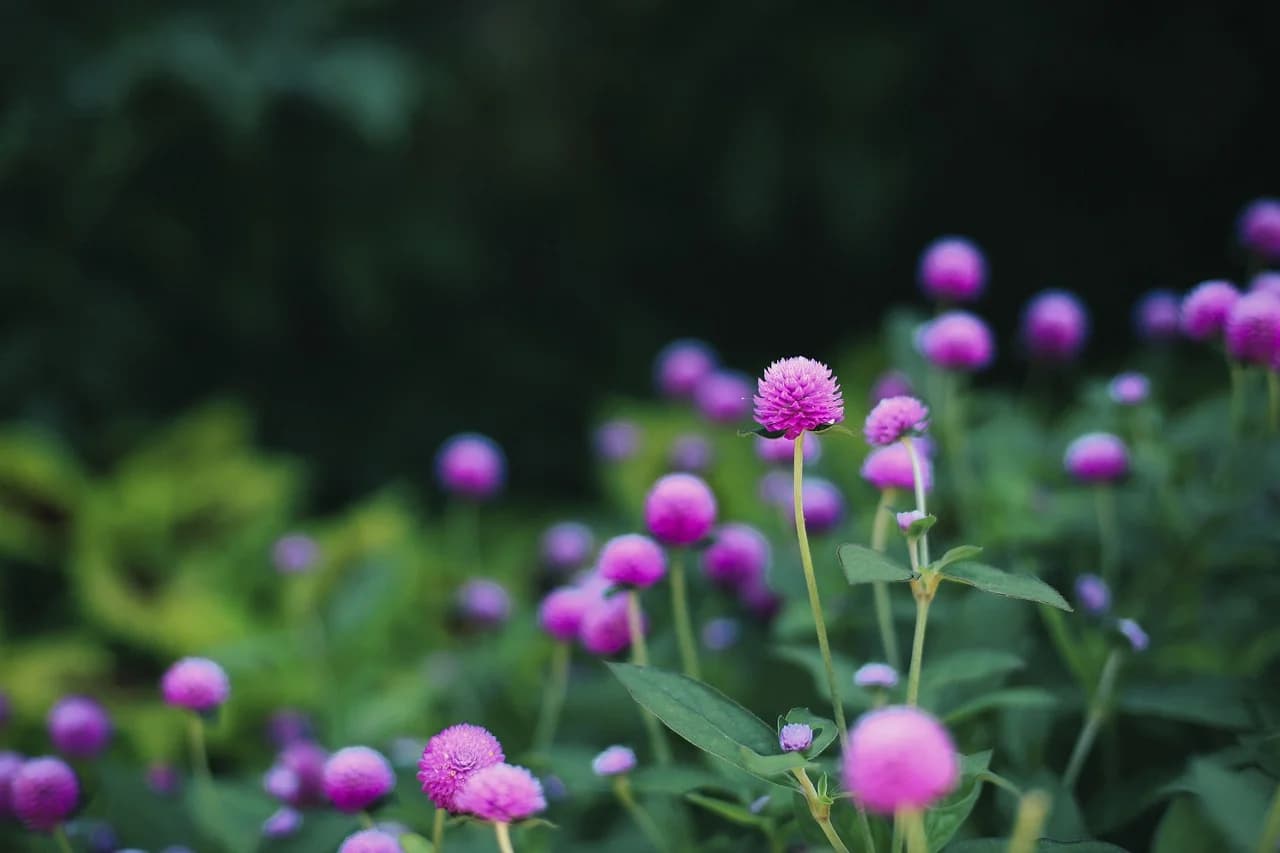
Globe amaranth (Gomphrena globosa) is a warm-season annual with papery pink, purple, or white flower heads that bloom from summer until frost in full sun. It is easy to start from seed indoors or sow outdoors.
Quick facts
- Germination time
- 14–21 days
- Germination temperature
- 21–24 °C70–75 °F
- Sowing depth
- Not yet verified
- Spacing between plants
- Not yet verified
- Days to maturity
- Not yet verified
- Sun
- Full sun, partial shade
Safety for cats and dogs: not yet verified.
By SeedBattle EditorsUpdated
Spotted a mistake or missing detail? Improve this page
01 · Overview
About gomphrena
Globe amaranth (Gomphrena globosa) is a tropical flowering summer annual native to Central and South America. It forms a dense, upright plant with round, clover-like flower heads in shades of pink, purple, or white. Plants usually reach 1 to 2 feet (30 to 61 cm) tall and 6 inches to 1 foot (15 to 30 cm) wide. The papery bracts keep their color well, so the flower heads can be dried for arrangements. The blooms draw bees, butterflies, and other pollinators.
Lifecycle. Most sources describe it as a summer annual, and it is tender to frost. In warmer zones it can also live as a perennial.
Growing details
- Start indoors
- 6–8 weeks before the last frost
- Sow outdoors
- Not yet verified
- Water
- Moderate
- Containers
- Yes
- Height
- 30–61 cm1–2 ft
- Spread
- 15–30 cm6–12 in
- Frost tolerance
- Tender (no frost)
- Soil pH
- Not yet verified
- Life cycle
- Not yet verified
Sowing timeline
When to sow gomphrena seeds
Counted from your area's average last spring frost date. Find yours from a local weather service or garden center, then count back or forward.
- Germination time
- 14–21 days
- Germination temperature
- 21–24 °C70–75 °F
- Frost tolerance
- Tender (no frost)
02 · How to grow
How to grow gomphrena from seed
Sowing. Start seeds indoors about 6 to 8 weeks before the last frost. Seeds may also be sown directly outdoors, although direct seeding is not recommended by one grower-focused seed source. Sow the seed in flats or small containers and cover it lightly with about ⅛ inch (3 mm) of growing mix.
Temperature. Keep the seeds at a steady 70 to 75°F (21 to 24 °C) to germinate well. Another source gives 68 to 75°F (20 to 24 °C) for the ‘Fireworks’ cultivar, and a different source suggests 15 to 18°C (59 to 64°F) in early spring.
Germination. Seedlings usually emerge in about 2 to 3 weeks. The germination rate can be low, so sow generously.
Transplanting. Buying transplants is the easiest way to start, since most nurseries sell them in cell packs. If you start your own seedlings, harden them off after the danger of frost has passed and move them out into full sun. Plant out after the last frost in full sun.
03 · Care
Caring for gomphrena
Watering. Once established, the plant is drought-tolerant, but it does best with regular watering during the growing season. Water only when conditions are very dry if you prefer a low-water approach.
Light and soil. Give it full sun, and it can tolerate some partial shade. It grows best in moist, well-drained, fertile soil.
Deadheading. The ‘Fireworks’ cultivar does not need deadheading.
At a glance
How gomphrena compares with other flowers
Worked out from the growing facts of the 79 seeds in Flowers on SeedBattle.
- Gomphrena
- Each of the other flowers
- Their average
- Germination timeSlower to sprout than average
14–21 days
Average for flowers: 12 days, from 42 other seeds
- Germination temperatureWarmer than average
21–24 °C70–75 °F
Average for flowers: 21 °C70 °F, from 40 other seeds
- HeightShorter than average
30–61 cm1–2 ft
Average for flowers: 71 cm2½ ft, from 68 other seeds
04 · Problems
Common gomphrena problems
Few insect or disease problems are expected, but some cultivars may get gray mold, root rot, stem rot, powdery mildew, or leaf spots. Drought-stressed plants can develop mildew, so regular irrigation during dry spells helps prevent it.
05 · Harvest
Harvesting gomphrena
For dried flowers, cut the stems when the flowers are fully open and the color is bright. Cutting them too late can make the flowers fall apart after drying.
Gomphrena questions
How long do globe amaranth seeds take to germinate?
Seedlings usually emerge in about 2 to 3 weeks when the seeds are kept at 70 to 75°F (21 to 24 °C). The germination rate can be low, so it helps to sow more seeds than you need.
Can I grow globe amaranth in a pot?
Yes, it performs well in planters and mixed container designs.
When should I plant globe amaranth?
Start seeds indoors about 6 to 8 weeks before the last frost. Plant the seedlings out after the last frost, in full sun.
Does globe amaranth need a lot of water?
It is drought-tolerant once established, but regular watering during the growing season helps it bloom well.
Quick answers
More gomphrena questions
Short answers taken from the growing facts on this page.
How much sun does gomphrena need?
Gomphrena grows in full sun or partial shade.
What temperature do gomphrena seeds need to sprout?
Gomphrena seeds germinate at 21–24 °C70–75 °F.
How tall does gomphrena grow?
Gomphrena grows 30–61 cm1–2 ft tall.
Can gomphrena survive frost?
No. Gomphrena is tender, so it can't take frost.
Side by side
Compare gomphrena with…
Two seeds, every growing fact lined up, so you can pick the one that suits your space.
Flowers
More seeds like gomphrena
Other seeds in the Flowers category.
Find your next seed to grow
Browse all 223 seeds by sun, difficulty or pot size, or line gomphrena up against another seed.