Gaura
Oenothera lindheimeri
Also called whirling butterflies, wandflower
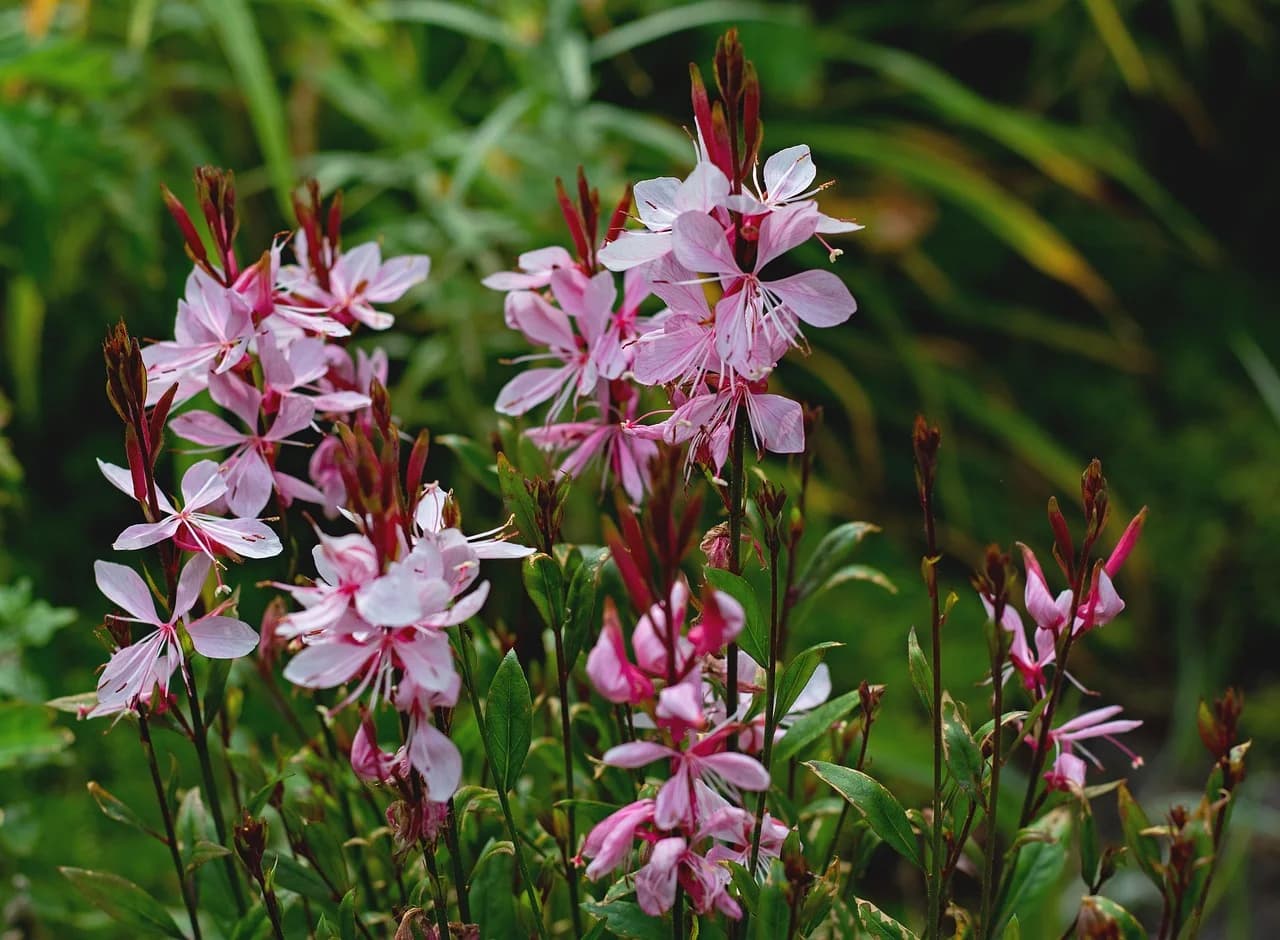
Gaura (Oenothera lindheimeri) is a clump-forming perennial with airy flowers from early summer to frost. It likes full sun and well-drained soil.
Quick facts
- Germination time
- Not yet verified
- Germination temperature
- Not yet verified
- Sowing depth
- Not yet verified
- Spacing between plants
- Not yet verified
- Days to maturity
- Not yet verified
- Sun
- Full sun
Safety for cats and dogs: not yet verified.
By SeedBattle EditorsUpdated
Spotted a mistake or missing detail? Improve this page
01 · Overview
About gaura
Gaura is a clump-forming perennial native to southeastern Texas, Louisiana, and Mexico. Its botanical name changed from Gaura to Oenothera in the early 2000s, though many catalogs still list it under Gaura. It is also known as wandflower, bee blossom and white gaura.
The flowers are about ½ to 1 inch (1.3 to 2.5 cm) wide, with four petals and long yellow stamens. They open from early summer until hard frost. Bees, bumblebees and butterflies visit the blooms.
Growing details
- Start indoors
- Not yet verified
- Sow outdoors
- Not yet verified
- Water
- Low
- Containers
- Yes
- Height
- 0.9–1.2 m3–4 ft
- Spread
- 76–91 cm2½–3 ft
- Frost tolerance
- Not yet verified
- Soil pH
- Not yet verified
- Life cycle
- Perennial
- Hardiness zones
- USDA zones 5–9
02 · How to grow
How to grow gaura from seed
Sowing. Seed can be sown in spring or fall, and plants can bloom the first year if seed is started in early spring. Gaura readily self-sows in favorable conditions and may naturalize in some areas.
Site. Choose full sun and well-drained soil; it prefers light soils but tolerates clay if drainage is good. Avoid rich soil, which encourages leafy growth, fewer flowers and floppy stems.
Propagation. Division is possible in spring, though the large root makes it difficult, and basal cuttings can be taken in summer. Many cultivars are propagated only vegetatively.
Size. Plants grow about 3 to 4 feet (91 to 122 cm) tall, and the stems can flop, so nearby plants may be needed for support.
03 · Care
Caring for gaura
Light and water. Grow gaura in full sun. Once established it tolerates drought, though adequate moisture gives better flowering; water and fertilize sparingly for compact growth.
Pruning. Deadheading is optional, but removing some flower stems keeps the plant tidier, encourages more blooms and reduces self-seeding. Plants can be sheared in late spring, removing up to half their height, to keep them smaller. Cut back the flower spikes in fall and remove dead foliage the following spring.
At a glance
How gaura compares with other flowers
Worked out from the growing facts of the 79 seeds in Flowers on SeedBattle.
- Gaura
- Each of the other flowers
- Their average
- HeightTaller than average
0.9–1.2 m3–4 ft
Average for flowers: 70 cm2½ ft, from 68 other seeds
04 · Problems
Common gaura problems
Root rot can occur in heavy, poorly drained soil. Plants may also get rust, powdery mildew, leaf spots, aphids, whiteflies and flea beetles. Deer are not known to favor it.
Gaura questions
When should I sow gaura seeds?
Gaura seed can be sown in spring or fall. Starting seed in early spring can give bloom in the first year.
Can I grow gaura in a pot?
Yes, the smaller cultivars can be grown in containers for an upright form.
How much sun does gaura need?
Gaura should be grown in full sun.
Is gaura drought tolerant?
Yes, once established it tolerates drought, although adequate moisture gives better flowering. It tolerates drought, heat and humidity.
Why is my gaura flopping over?
Stems may become leggy and flop when grown in rich soil or too much shade. Nearby plants can give support.
Quick answers
More gaura questions
Short answers taken from the growing facts on this page.
How tall does gaura grow?
Gaura grows 0.9–1.2 m3–4 ft tall.
Is gaura an annual or a perennial?
Gaura is a perennial.
How much water does gaura need?
Gaura has low water needs.
Which USDA zones can gaura grow in?
Gaura is hardy in USDA zones 5–9.
Side by side
Compare gaura with…
Two seeds, every growing fact lined up, so you can pick the one that suits your space.
Flowers
More seeds like gaura
Other seeds in the Flowers category.
Find your next seed to grow
Browse all 223 seeds by sun, difficulty or pot size, or line gaura up against another seed.