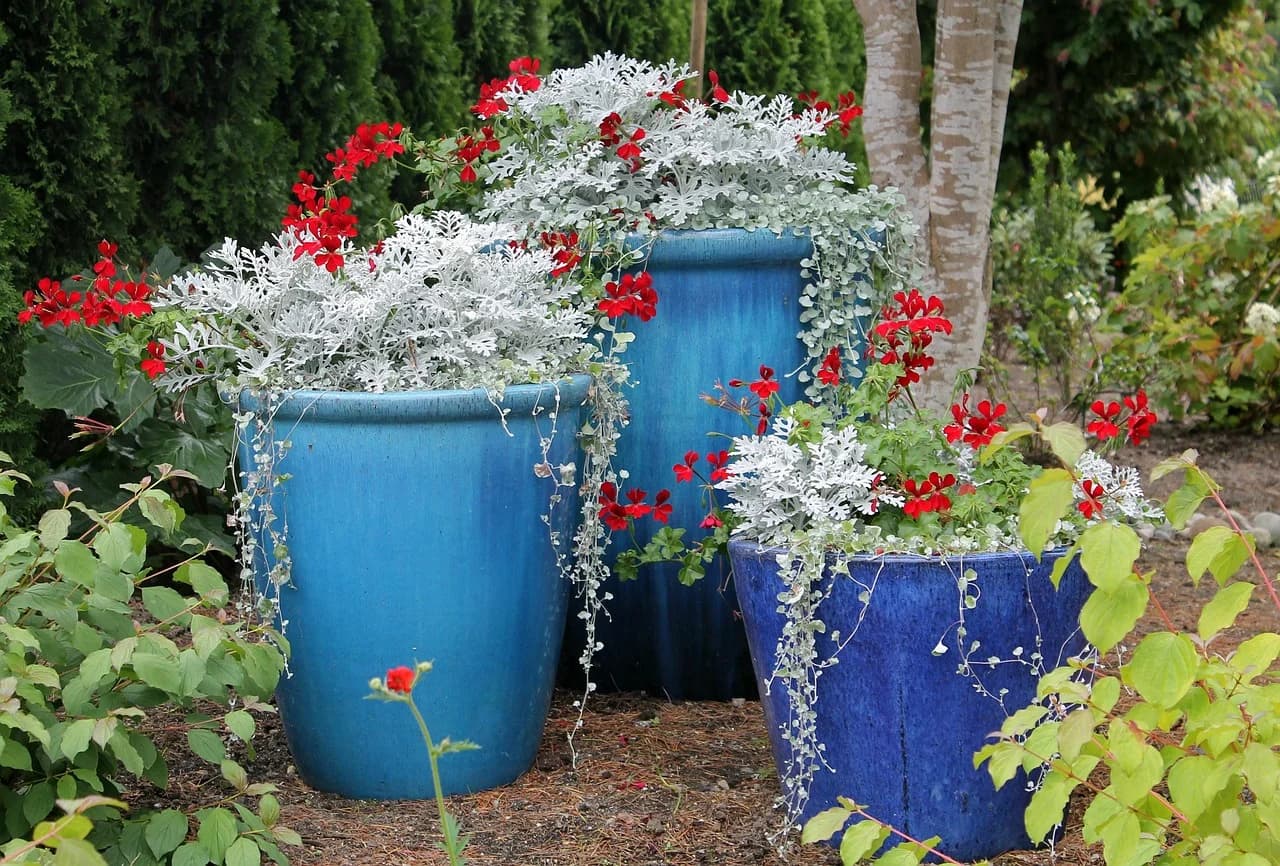
Dusty Miller
Jacobaea maritima
Also called silver ragwort, silver dust
Dusty miller is a low-growing plant with silvery, lace-like leaves, usually grown for its foliage. Its parts are toxic if eaten, so keep it away from pets.
Quick facts
- Germination time
- 7–10 days
- Germination temperature
- 22–24 °C72–75 °F
- Sowing depth
- On the surface
- Spacing between plants
- Not yet verified
- Days to maturity
- Not yet verified
- Sun
- Full sun, partial shade
Toxic to people, cats and dogs Read the safety notes
By SeedBattle EditorsUpdated
Spotted a mistake or missing detail? Improve this page
01 · Overview
About dusty miller
Dusty miller is a low-growing, rounded plant grown mainly for its silvery, woolly foliage. Its leaves are lobed and cut into segments, and cultivars vary widely in how finely they are divided. Mature plants usually reach about 6 to 18 inches (15 to 46 cm) tall and 6 to 12 inches (15 to 30 cm) wide. It is a perennial, but it is usually grown as an annual.
Growing details
- Start indoors
- 10–15 weeks before the last frost
- Sow outdoors
- Not yet verified
- Water
- Not yet verified
- Containers
- Yes
- Height
- 15–46 cm6–18 in
- Spread
- 15–30 cm6–12 in
- Frost tolerance
- Not yet verified
- Soil pH
- Not yet verified
- Life cycle
- Perennial
- Hardiness zones
- USDA zones 7–10
Sowing timeline
When to sow dusty miller seeds
Counted from your area's average last spring frost date. Find yours from a local weather service or garden center, then count back or forward.
- Germination time
- 7–10 days
- Germination temperature
- 22–24 °C72–75 °F
02 · How to grow
How to grow dusty miller from seed
Start seeds indoors about 10 to 15 weeks before your last spring frost date. Seeds need light to sprout, so sow them on the surface of the growing mix and leave them uncovered.
Seeds usually sprout in 7 to 10 days when kept at 72 to 75 °F (22 to 24 °C). Another source gives 68 to 77 °F (20 to 25 °C) as a germination range.
Move seedlings into cell packs or larger containers once their first true leaves appear. Direct sowing outdoors is not recommended. Most people buy new plants in spring, but stem cuttings are another way to propagate it.
03 · Care
Caring for dusty miller
Light and soil. It grows best in full sun to partial shade in moist but well-drained soil. Heavy shade makes it tend to grow leggy.
Blooms and pruning. Removing the flowers helps the plant put its energy into foliage. Prune it once a year, preferably in fall or early winter, to encourage healthy growth in spring.
Feeding. Adding compost through the year reduces the need for fertilizer.
At a glance
How dusty miller compares with other flowers
Worked out from the growing facts of the 79 seeds in Flowers on SeedBattle.
- Dusty Miller
- Each of the other flowers
- Their average
- Germination timeSprouts sooner than average
7–10 days
Average for flowers: 12 days, from 42 other seeds
- Germination temperatureWarmer than average
22–24 °C72–75 °F
Average for flowers: 21 °C70 °F, from 40 other seeds
- Sowing depthShallower than average
On the surface
Average for flowers: 4 mm⅛ in, from 25 other seeds
- HeightShorter than average
15–46 cm6–18 in
Average for flowers: 71 cm2½ ft, from 68 other seeds
04 · Problems
Common dusty miller problems
Serious insect and disease problems are not common, but the plant may be bothered by slugs and rust. Too much water or poor drainage can cause root rot or stem rot.
05 · Harvest
Harvesting dusty miller
Stems can be cut and used as a filler in flower arrangements. Many gardeners remove the small yellow flowers because they can take attention away from the foliage.
06 · Safety
Dusty Miller safety
Dusty miller is toxic if eaten, and every part of the plant counts as toxic. Keep it away from pets, since the page lists it as toxic to pets. Do not eat any part of this plant, because it can cause serious liver damage.
Handling the plant can irritate the skin, so wear gloves and protective clothing when you work with it.
Dusty Miller questions
How long do dusty miller seeds take to germinate?
Seeds usually sprout in 7 to 10 days when kept at 72 to 75 °F (22 to 24 °C).
When should I start dusty miller seeds indoors?
Start them about 10 to 15 weeks before your last spring frost date. Keep the seed uncovered, since it needs light to sprout.
Can I grow dusty miller in a pot?
Yes. It grows well in containers and is often used as a container planting.
Is dusty miller toxic?
If eaten, it is toxic to pets and humans, and all parts of the plant are toxic.
Quick answers
More dusty miller questions
Short answers taken from the growing facts on this page.
How deep should I sow dusty miller seeds?
Sow them on the surface.
How much sun does dusty miller need?
Dusty miller grows in full sun or partial shade.
What temperature do dusty miller seeds need to sprout?
Dusty miller seeds germinate at 22–24 °C72–75 °F.
How tall does dusty miller grow?
Dusty miller grows 15–46 cm6–18 in tall.
Is dusty miller an annual or a perennial?
Dusty miller is a perennial.
Which USDA zones can dusty miller grow in?
Dusty miller is hardy in USDA zones 7–10.
Side by side
Compare dusty miller with…
Two seeds, every growing fact lined up, so you can pick the one that suits your space.
Flowers
More seeds like dusty miller
Other seeds in the Flowers category.
Find your next seed to grow
Browse all 223 seeds by sun, difficulty or pot size, or line dusty miller up against another seed.
