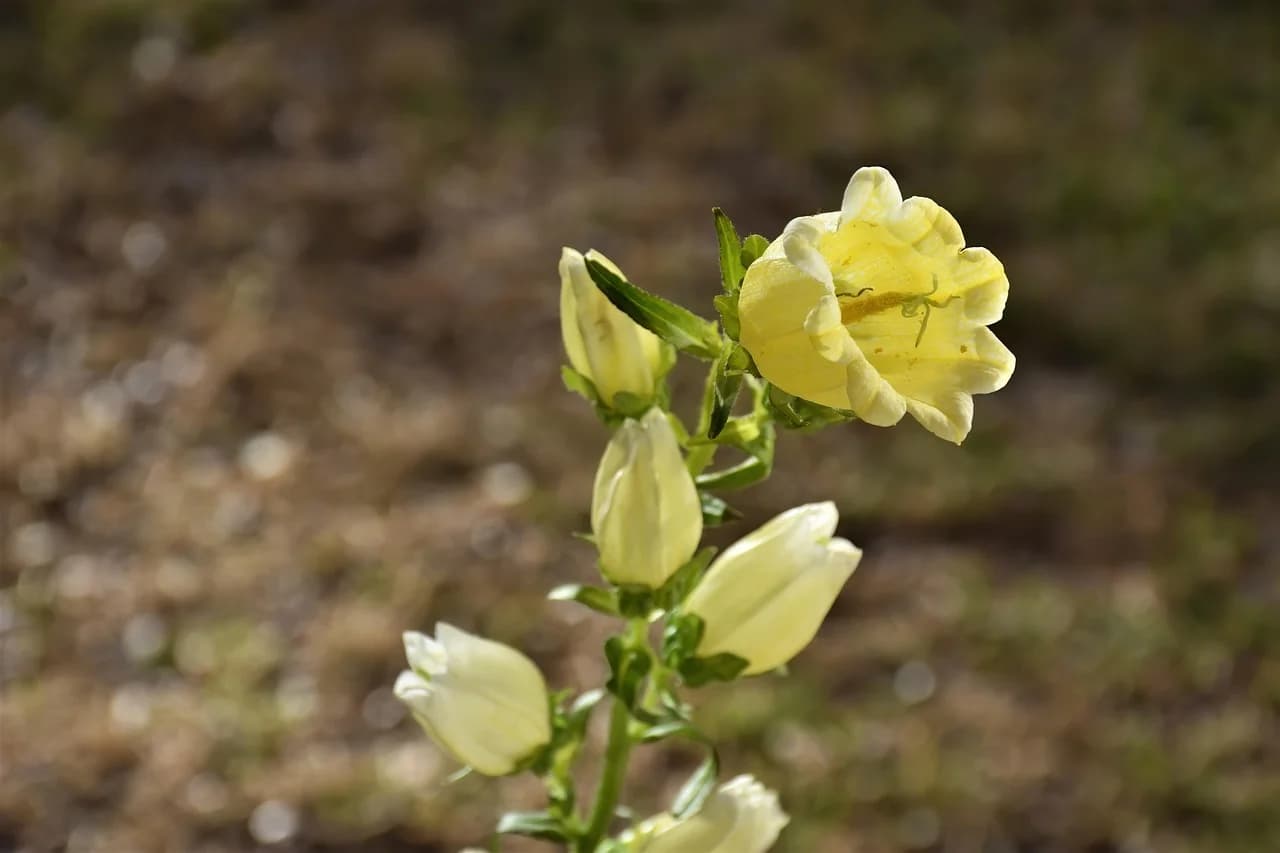
Canterbury Bells
Campanula medium
Also called bellflower
Canterbury bells is a biennial with bell-shaped blue, pink, or white summer flowers. Seed is surface sown from late spring to early summer, and the plant does best in cooler climates.
Quick facts
- Germination time
- 7–14 days
- Germination temperature
- 18–20 °C64–68 °F
- Sowing depth
- On the surface
- Spacing between plants
- Not yet verified
- Days to maturity
- Not yet verified
- Sun
- Full sun, partial shade
Safety for cats and dogs: not yet verified.
By SeedBattle EditorsUpdated
Spotted a mistake or missing detail? Improve this page
01 · Overview
About canterbury bells
Canterbury bells is a tall, upright biennial in the bellflower family. It produces showy, bell-shaped flowers in blue, pink, or white during summer, and many are sweetly fragrant. Flowers can be single or double. The plant is native to southeastern France and northern and central Italy, where it grows on rocky slopes. Other names include Coventry bells, cup and saucer, and lady’s nightcap.
Growing details
- Start indoors
- Not yet verified
- Sow outdoors
- Not yet verified
- Water
- Moderate
- Containers
- Yes
- Height
- 30–91 cm1–3 ft
- Spread
- 30–61 cm1–2 ft
- Frost tolerance
- Not yet verified
- Soil pH
- Not yet verified
- Life cycle
- Not yet verified
02 · How to grow
How to grow canterbury bells from seed
Sowing. Surface sow the seed from late spring to early summer. Seedlings can take about 7 to 14 days to appear when kept at 65 to 68 °F (18 to 20 °C). Light is needed for germination, so cover the seed only with a fine layer of vermiculite or growing mix. A seed company advises starting seed in plug trays or seedling containers 6 to 8 weeks before planting out, and advises against direct sowing. Seed is best started in fall, winter, or early spring for that method. In milder areas, direct sowing in autumn is also mentioned.
Growing habit. Canterbury bells is biennial. In the first year it forms a low clump of basal leaves, which should be well mulched through the first winter. Stems and flowers appear in the second year. Plants can also be divided in spring.
Site. Plants grow in full sun to partial shade and prefer fertile, moist but well-drained soil. Expect plants about 1 to 3 feet (30 to 91 cm) tall and 1 to 2 feet (30 to 61 cm) wide.
03 · Care
Caring for canterbury bells
Cool climates. Plants do best in cooler climates and dislike temperatures over 80 °F (27 °C). In warmer regions, afternoon shade or filtered sun is needed.
Support. Planting in a group helps the plants support each other, though stakes may be needed in windy spots.
Deadheading and reseeding. Deadheading spent flowers encourages new growth. To get blooms every year, let some seed pods mature so they reseed the bed. Leaving spent flowers in place keeps self-seeding possible, while removing spent flower spikes may bring a second flush of flowers.
At a glance
How canterbury bells compares with other flowers
Worked out from the growing facts of the 79 seeds in Flowers on SeedBattle.
- Canterbury Bells
- Each of the other flowers
- Their average
- Germination timeSprouts sooner than average
7–14 days
Average for flowers: 12 days, from 42 other seeds
- Germination temperatureCooler than average
18–20 °C64–68 °F
Average for flowers: 21 °C70 °F, from 40 other seeds
- Sowing depthShallower than average
On the surface
Average for flowers: 4 mm⅛ in, from 25 other seeds
- HeightShorter than average
30–91 cm1–3 ft
Average for flowers: 70 cm2½ ft, from 68 other seeds
04 · Problems
Common canterbury bells problems
Pests and diseases. Watch for snails and slugs. Plants are vulnerable to slugs and snails. They are susceptible to rust and powdery mildew, and powdery mildews and rust diseases may be a problem.
05 · Harvest
Harvesting canterbury bells
Flowers are listed as good for cutting and long-lasting.
Canterbury Bells questions
How long do Canterbury bells seeds take to germinate?
Seeds are listed to sprout in about 7 to 14 days at 65 to 68 °F (18 to 20 °C).
When should I plant Canterbury bells from seed?
Surface sow the seed from late spring to early summer. In milder areas, direct sowing in autumn is also mentioned.
Can I grow Canterbury bells in a pot?
Yes, the plant is listed as suitable for container cultivation.
Will Canterbury bells flower the first year?
Canterbury bells is biennial, so it forms a leafy clump the first year and flowers in the second.
Quick answers
More canterbury bells questions
Short answers taken from the growing facts on this page.
How deep should I sow canterbury bells seeds?
Sow them on the surface.
How much sun does canterbury bells need?
Canterbury bells grows in full sun or partial shade.
What temperature do canterbury bells seeds need to sprout?
Canterbury bells seeds germinate at 18–20 °C64–68 °F.
How tall does canterbury bells grow?
Canterbury bells grows 30–91 cm1–3 ft tall.
How much water does canterbury bells need?
Canterbury bells has moderate water needs.
Side by side
Compare canterbury bells with…
Two seeds, every growing fact lined up, so you can pick the one that suits your space.
Flowers
More seeds like canterbury bells
Other seeds in the Flowers category.
Find your next seed to grow
Browse all 223 seeds by sun, difficulty or pot size, or line canterbury bells up against another seed.
