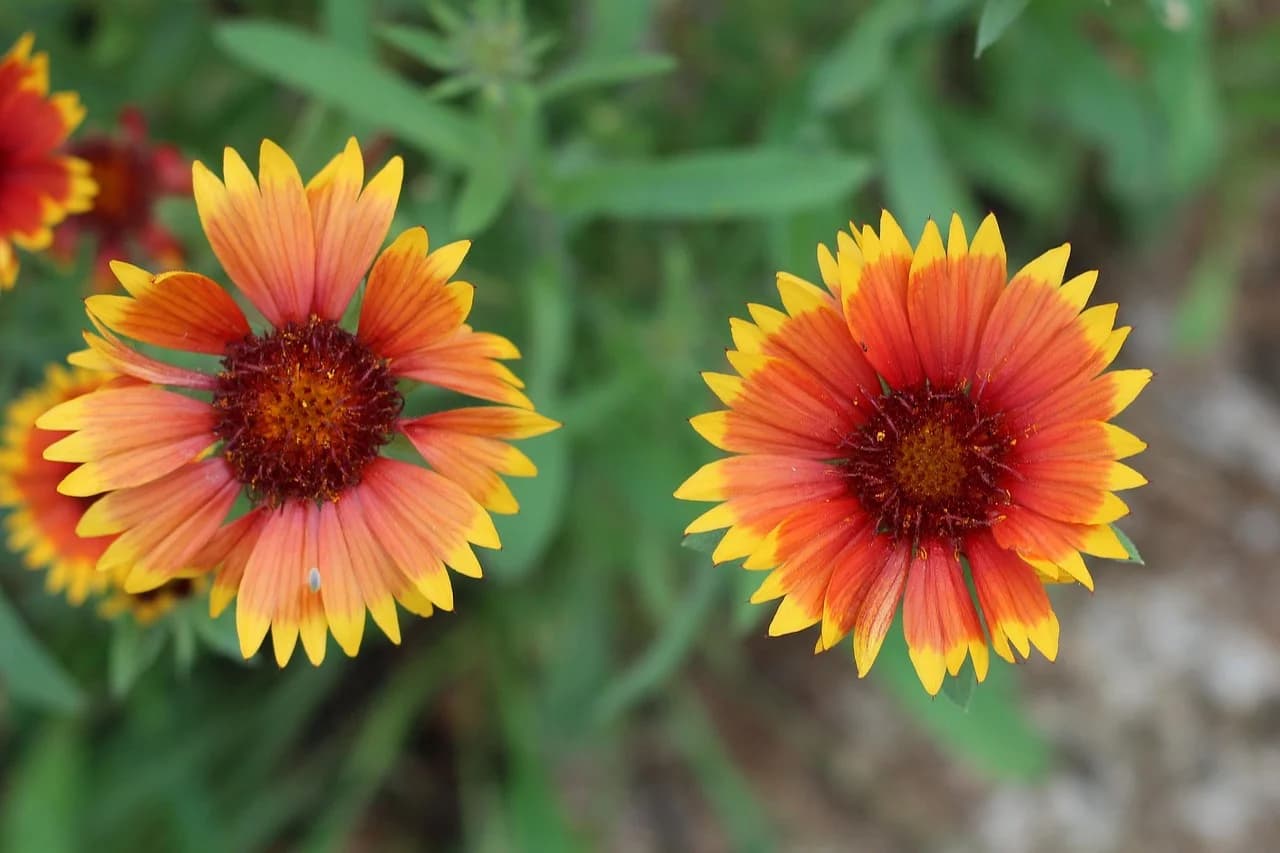
Blanket Flower
Gaillardia × grandiflora
Also called gaillardia
Blanket flower is a long-blooming perennial with daisy-like red, orange and yellow flowers. It grows best in full sun and well-drained soil, and it is fairly easy to start from seed.
Quick facts
- Germination time
- Not yet verified
- Germination temperature
- Not yet verified
- Sowing depth
- Not yet verified
- Spacing between plants
- Not yet verified
- Days to maturity
- Not yet verified
- Sun
- Full sun
Safety for cats and dogs: not yet verified.
By SeedBattle EditorsUpdated
Spotted a mistake or missing detail? Improve this page
01 · Overview
About blanket flower
Blanket flower is a heat-tolerant plant with daisy-like flowers in shades of red, orange, and yellow, and it belongs to the sunflower family. The hybrid Gaillardia x grandiflora is the type most often grown in gardens. It is a long-blooming perennial that flowers from June through October, and its flowers attract butterflies and native bees.
Growing details
- Start indoors
- 6–8 weeks before the last frost
- Sow outdoors
- Not yet verified
- Water
- Low
- Containers
- Yes
- Height
- 46–61 cm1½–2 ft
- Spread
- Not yet verified
- Frost tolerance
- Not yet verified
- Soil pH
- Not yet verified
- Life cycle
- Perennial
- Hardiness zones
- USDA zones 2–10
Sowing timeline
When to sow blanket flower seeds
Counted from your area's average last spring frost date. Find yours from a local weather service or garden center, then count back or forward.
02 · How to grow
How to grow blanket flower from seed
Sowing. Some hybrids and species are easily grown from seed and often self-sow. For perennial types, start seeds indoors about 6 to 8 weeks before the average last frost. Perennial types generally take 4 to 5 months from sowing to flowering.
Transplanting. Set out annual types just after the last spring frost, and set perennials out a bit later.
Annual types. Scatter the seed of annual types on the soil surface where you want them to grow, because they need light to germinate. Mark the area, since the seedlings look like young dandelions.
Cultivars. Some cultivars are vegetative and are propagated from basal cuttings or by division instead of seed.
03 · Care
Caring for blanket flower
Light and soil. Grow blanket flower in full sun and well-drained soil. It needs very well-drained soil to survive winter, and it rarely survives winter in heavy soil, so use berms or containers if that is all you have.
Watering and feeding. Once established, blanket flower is drought tolerant and needs little fertilizer. Don’t over fertilize.
Deadheading and pruning. Deadheading is optional, but it keeps the plant tidy and may encourage more blooms. Deadheading also helps keep the plant blooming. Cutting the plants back to 6 inches (15 cm) in late summer may improve winter survival.
Winter. Most plants survive to -20 °F (-29 °C) without crown protection when drainage is good. Mulch or snow cover helps plants in very cold winters.
At a glance
How blanket flower compares with other flowers
Worked out from the growing facts of the 79 seeds in Flowers on SeedBattle.
- Blanket Flower
- Each of the other flowers
- Their average
- HeightShorter than average
46–61 cm1½–2 ft
Average for flowers: 70 cm2½ ft, from 68 other seeds
04 · Problems
Common blanket flower problems
Blanket flower has few pest problems, but it is susceptible to aster yellows and powdery mildew. Plants tend to be short lived, with an average lifespan of two years, because they bloom so heavily that they wear themselves out. Deer and rabbits usually avoid it, and it is reported to be deer resistant.
05 · Harvest
Harvesting blanket flower
Taller types make nice cut flowers. The flowers age into fuzzy seed heads that birds, especially goldfinches, eat, or that fall to the ground and self-sow.
06 · Safety
Blanket Flower safety
The leaves contain compounds (lactones) that can cause contact dermatitis in some people, so wear gloves when handling the plants.
Blanket Flower questions
How do I start blanket flower from seed?
Start perennial types indoors about 6 to 8 weeks before the average last frost. Annual types are scattered on the soil surface because they need light to germinate.
Can I grow blanket flower in a pot?
Yes, blanket flower can be used in containers. It needs very well-drained soil to survive the winter.
How tall does blanket flower grow?
Blanket flower typically grows 18 to 24 inches (46 to 61 cm) tall. Some taller types reach 3 feet (91 cm) and may need support.
Does blanket flower come back every year?
Blanket flower is a perennial, but plants tend to be short lived, with an average lifespan of two years.
Quick answers
More blanket flower questions
Short answers taken from the growing facts on this page.
When should I start blanket flower seeds indoors?
Start them indoors 6–8 weeks before the last frost.
How much sun does blanket flower need?
Blanket flower grows in full sun.
How much water does blanket flower need?
Blanket flower has low water needs.
Which USDA zones can blanket flower grow in?
Blanket flower is hardy in USDA zones 2–10.
Side by side
Compare blanket flower with…
Two seeds, every growing fact lined up, so you can pick the one that suits your space.
Flowers
More seeds like blanket flower
Other seeds in the Flowers category.
Find your next seed to grow
Browse all 223 seeds by sun, difficulty or pot size, or line blanket flower up against another seed.
